
Everest Base Camp Short Trek: 10-Day Itinerary, Cost & Permits
16th Sep, 2026
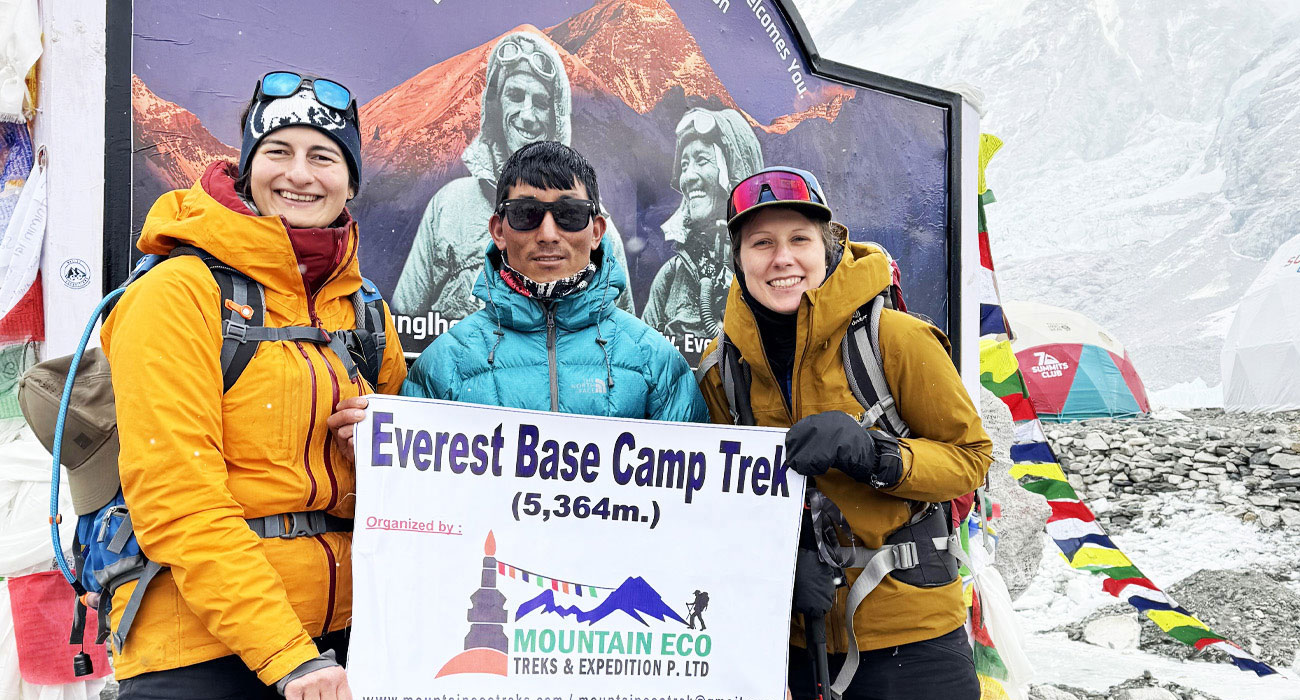
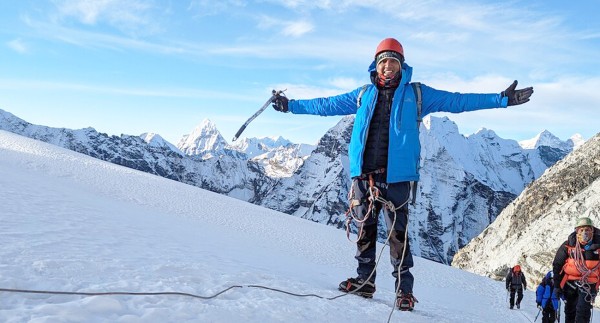
Most people budget two weeks for Everest Base Camp. If you don't have two weeks, the short trek is the honest alternative — not a shortcut that cuts corners, but a faster-paced route to the same destination, built for trekkers who already have solid fitness and some experience walking at altitude.
Table of Contents
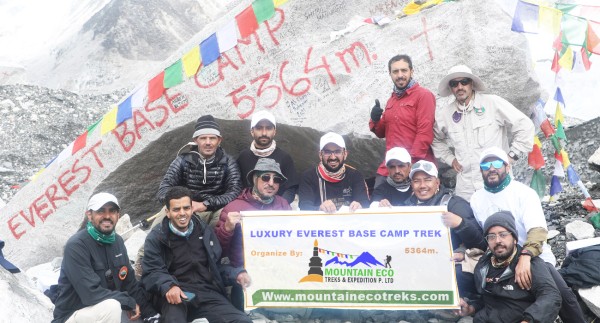
In 10 days flat, Lukla to Lukla, you fly into the Khumbu, walk up through Namche Bazaar and Tengboche, stand at 5,364 m on the Khumbu Glacier moraine at Everest Base Camp itself, and catch sunrise from Kala Patthar at 5,545 m — the best Everest viewpoint on the entire trail — before retracing your steps back down.
This guide covers the complete 10-day itinerary, the permits you need with 2026 fees, a full cost breakdown, the best season, how hard it really is, and the questions trekkers ask us most.
Book or customise this trek here: Everest Base Camp Short Trek — Mountain Eco Treks
Quick Facts: Everest Base Camp Short Trek at a Glance
| Detail | Information |
|---|---|
| Trek duration | 10 days (Lukla to Lukla, flights from Kathmandu) |
| Maximum altitude | Kala Patthar — 5,545 m / 18,192 ft |
| Everest Base Camp altitude | 5,364 m / 17,598 ft |
| Trek start point | Lukla, via Kathmandu or Ramechhap |
| Trek end point | Lukla, flight back to Kathmandu |
| Difficulty | Strenuous |
| Daily walking | 5–8 hours |
| Total distance | Approx. 130 km round trip |
| Accommodation | Teahouses and mountain lodges |
| Best seasons | March–May (spring), September–November (autumn) |
| Permits required | Sagarmatha National Park Permit, Khumbu Pasang Lhamu Rural Municipality Permit |
| Guide | Licensed guide required and included |
| Package cost (2026) | USD 1,250 – 1,580 per person |
| Group size | 1–15 |
Who Is the Everest Base Camp Short Trek For?
This is not the trek for a first-time trekker with no altitude experience. It compresses the classic 12–14 day itinerary into 10 days by cutting rest days, which means:
- You reach Base Camp faster. Same destination, same views, fewer days off work.
- The pace is genuinely demanding. Daily elevation gains are steeper than the standard itinerary, so the margin for acclimatisation is smaller.
- Prior trekking experience matters. Trekkers who have done a multi-day trek above 3,000 m before, or who know how their body handles altitude, are the right fit.
- It's the same iconic route. Lukla, Namche Bazaar, Tengboche, Dingboche, Lobuche, Gorak Shep, Everest Base Camp, Kala Patthar — nothing about the trail itself is shortened, only the schedule.
- It costs less than the standard or luxury versions. Fewer trekking days means lower guide, porter, lodge and flight-buffer costs.
Honest note from us: if you are newer to high-altitude trekking, the standard Everest Base Camp Trek with built-in acclimatisation days is the safer, more comfortable choice. If you want this same route with better lodges and more relaxed pacing, look at the Everest Base Camp Luxury Trek instead. We would rather point you to the right itinerary than sell you the wrong one.
10-Day Everest Base Camp Short Trek Itinerary
This is the itinerary we run at Mountain Eco Treks. The route is: Kathmandu – Lukla – Phakding – Namche Bazaar – Tengboche – Dingboche – Lobuche – Gorak Shep – Everest Base Camp – Kala Patthar – Lukla.
Itinerary Summary Table
| Day | Route | Distance | Elevation | Time |
|---|---|---|---|---|
| 1 | Flight to Lukla, trek to Phakding | 8 km | 2,610 m | 3–4 hrs |
| 2 | Phakding to Namche Bazaar | 10.5 km | 3,440 m | 6–7 hrs |
| 3 | Namche Bazaar to Tengboche | 9.5 km | 3,867 m | 5–6 hrs |
| 4 | Tengboche to Dingboche | 8.5 km | 4,410 m | 5–6 hrs |
| 5 | Dingboche to Lobuche | 7 km | 4,940 m | 4–5 hrs |
| 6 | Lobuche to Gorak Shep, hike to Everest Base Camp | 4.5 km + 3.5 km | 5,164 m / 5,364 m | 6–7 hrs |
| 7 | Hike Kala Patthar, trek down to Pheriche | 12 km | 5,545 m → 4,371 m | 6–7 hrs |
| 8 | Pheriche to Namche Bazaar | 19 km | 3,440 m | 6–7 hrs |
| 9 | Namche Bazaar to Lukla | 18.5 km | 2,860 m | 6–7 hrs |
| 10 | Flight to Kathmandu | — | 1,400 m | ~30 min flight |
Day-by-Day Detail Itinerary
Day 1 — Flight to Lukla, trek to Phakding (2,610 m), 3–4 hours
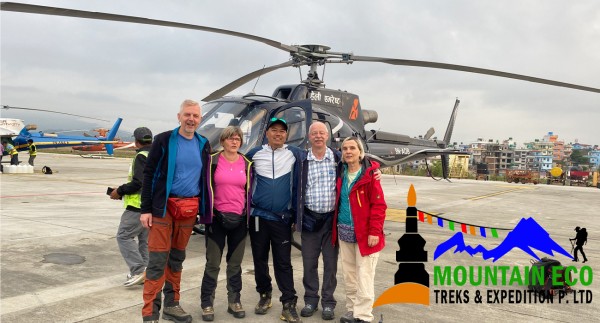
One of the wildest short flights anywhere in the world, landing on Lukla's famously tiny mountain airstrip. In peak season the flight usually departs from Ramechhap rather than Kathmandu directly, so budget a few extra hours for the drive there. The walk down to Phakding is easy and mostly downhill, following the Dudh Koshi River past mani walls and prayer wheels.
Day 2 — Phakding to Namche Bazaar (3,440 m), 6–7 hours
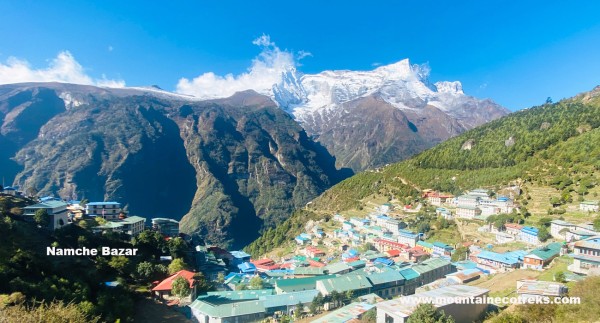
One of the tougher climbs on the whole trek. The trail follows the river through pine forest, then crosses the long, swaying Hillary Suspension Bridge high above the gorge. About an hour before Namche, Everest itself appears briefly above the ridgeline on a clear day. Namche is the biggest settlement on the route — bakeries, gear shops, lodges stacked up the hillside.
Day 3 — Namche Bazaar to Tengboche (3,867 m), 5–6 hours
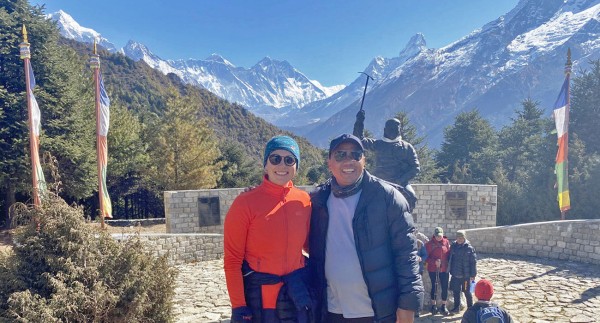
Drop to the river, then climb back up through rhododendron forest — spectacular in April and May when it's in bloom. Ama Dablam dominates the skyline for most of the day. Tengboche Monastery, with prayer flags rippling above it and monks chanting inside, is one of the most atmospheric stops on the trail.
Day 4 — Tengboche to Dingboche (4,410 m), 5–6 hours
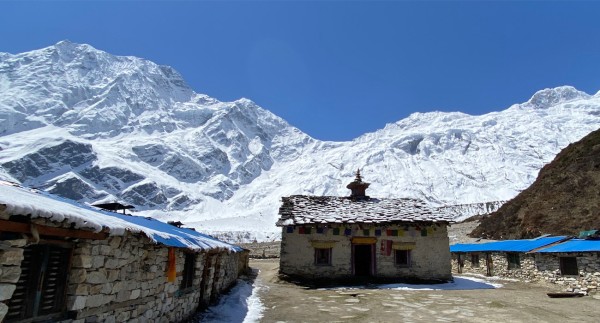
The forest disappears fast past Tengboche and the terrain opens into scrubby high-altitude country. Dingboche sits in a wide valley ringed by Lhotse, Ama Dablam and Taboche. This is usually where altitude starts to be felt — slow down, drink more than feels necessary, and take any headache or nausea seriously.
Day 5 — Dingboche to Lobuche (4,940 m), 4–5 hours
Shorter distance but real elevation work for acclimatisation. The trail follows the moraine of the Khumbu Glacier — you can sometimes hear it shift beneath the rocks. Stone memorials line the route, honouring climbers and Sherpas who did not return from Everest.
Day 6 — Lobuche to Gorak Shep, hike to Everest Base Camp, 6–7 hours
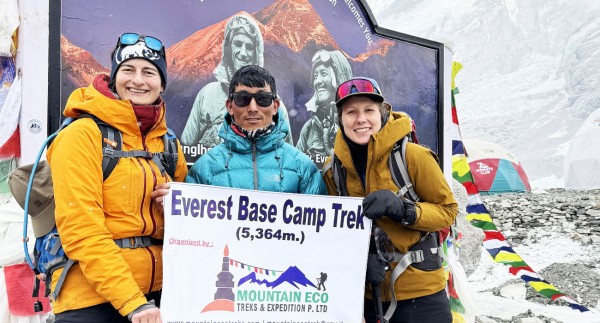
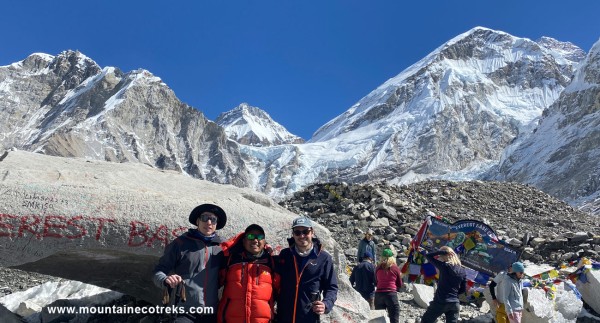
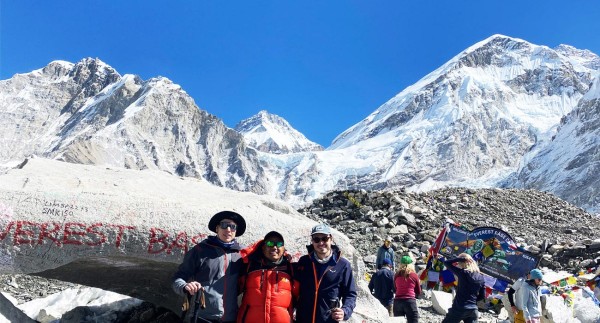
Rough, rocky moraine to Gorak Shep, then the final push: a slow scramble over boulders and ice to Everest Base Camp (5,364 m), with the Khumbu Icefall rearing up ahead in jagged blue-white blocks. Standing there with the glacier creaking around you is the payoff for everything before it.
Day 7 — Kala Patthar sunrise, trek down to Pheriche, 6–7 hours
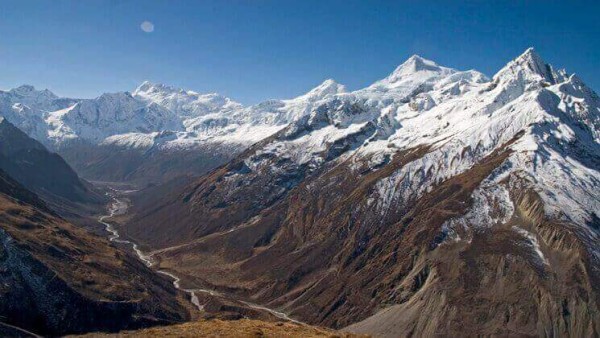
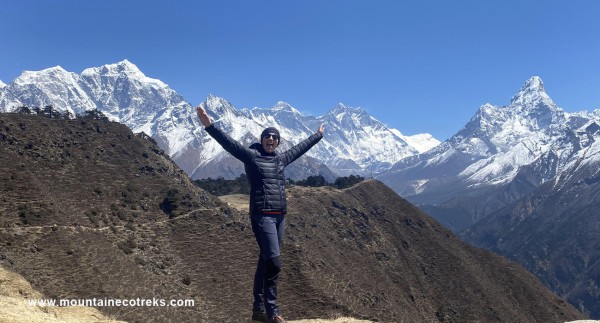
A brutally cold, pre-dawn climb up Kala Patthar (5,545 m) for the best sunrise view of Everest, Lhotse and Nuptse in the Himalaya. The long descent back through Gorak Shep to Pheriche (4,371 m) feels like a gift after the thin air above.
Day 8 — Pheriche to Namche Bazaar (3,440 m), 6–7 hours
Mostly about covering distance, retracing the route through Tengboche. The forest feels lush again after days of bare rock, and most groups loosen up on this stretch, swapping stories from the days spent up high.
Day 9 — Namche Bazaar to Lukla (2,860 m), 6–7 hours
The last full day, following the Dudh Koshi back down through familiar villages. Long but easy compared to what came before — most groups arrive in Lukla with enough energy for a proper celebration with their guide and porters.
Day 10 — Flight to Kathmandu
Weather-dependent: sometimes a direct flight from Lukla, sometimes routed through Ramechhap with extra road time. Either way, one last look at the mountains from above before Kathmandu's traffic and noise close back in.
Want a slower pace with a dedicated acclimatisation day, upgraded lodges, or a helicopter return from Gorak Shep? We customise it — send us your dates.
Why You Should Build In Spare Days at the End
Lukla's weather has a reputation for a reason. Flights get delayed or cancelled — sometimes for a day or more — fairly regularly, especially in the busy March–May and September–November windows. If your international flight home is booked tight against your last trekking day, one bad-weather morning in Lukla can throw off the whole trip. Build in 1–2 spare days. It is the cheapest insurance you will buy on this trip.
Everest Base Camp Short Trek Permits (2026)
Unlike Manaslu or restricted regions further west, the Khumbu requires no restricted-area permit and no TIMS card — that requirement was replaced by a local municipality permit in 2018. You need two documents.
The Two Permits You Need
| # | Permit | Issued by | Where obtained |
|---|---|---|---|
| 1 | Sagarmatha National Park Entry Permit | Nepal Tourism Board | Kathmandu (Bhrikutimandap) or Monjo checkpoint |
| 2 | Khumbu Pasang Lhamu Rural Municipality Permit | Khumbu Pasang Lhamu Rural Municipality | Lukla or Monjo |
2026 Permit Fees
| Permit | Foreign nationals | SAARC nationals |
|---|---|---|
| Sagarmatha National Park | NPR 3,000 (approx. USD 22–23) | NPR 1,500 |
| Khumbu Pasang Lhamu Rural Municipality | NPR 3,000 (approx. USD 22–23) | NPR 2,000 |
| Total | NPR 6,000 (approx. USD 44–46) | NPR 3,500 (approx. USD 25) |
Both permits are included in every Mountain Eco Treks package — you don't pay these separately.
Important notes:
- Fees are per person, non-refundable and non-transferable.
- The Khumbu Pasang Lhamu Rural Municipality Permit is not available in Kathmandu — it's issued only at Lukla or the Monjo checkpoint.
- The Sagarmatha National Park permit is checked and stamped at Monjo village on Day 2.
- No TIMS card is required for the standard EBC route — older guides that still list TIMS for this trek are out of date.
- If you route via Jiri instead of flying to Lukla, you'll need an additional Gaurishankar Conservation Area Permit.
- Permit rules and fees are revised periodically. We confirm the current rate before every departure.
Do You Need a Guide?
Yes, and it's strongly recommended regardless of the rules. A licensed guide handles navigation, monitors acclimatisation, manages logistics at teahouses, and is essential if altitude symptoms or an emergency arise. Every Mountain Eco Treks package includes an NTB-certified, first-aid trained guide.
Documents Required
- Passport valid at least six months beyond your travel dates
- Nepal tourist visa (on arrival at Tribhuvan International Airport, or apply online in advance)
- One to two passport-sized photographs
- Travel insurance covering high-altitude trekking and emergency evacuation up to 5,000 m or higher
Nepal tourist visa fees (2026): 15 days — USD 30; 30 days — USD 50; 90 days — USD 125. Indian citizens do not require a visa. Children under 10 do not pay the visa fee.
Everest Base Camp Short Trek Cost (2026)
Package Cost
Mountain Eco Treks runs this itinerary in two service levels:
| Package | 2026 Price (per person) | Best for |
|---|---|---|
| Standard Plan | USD 1,580 | Comfort-focused trekkers wanting private airport transfers, an assistant guide for larger groups, and a wider inclusions list |
| Budget Plan | USD 1,250 | Trekkers keeping costs tight, comfortable with a guide-only team and fewer extras |
Prices vary with group size, season and service level. Request a tailored quote for your dates.
What the Standard Package Includes
- 2 nights in a 3-star Kathmandu hotel (twin sharing, breakfast included), before and after the trek
- 9 nights in mountain teahouses/lodges during the trek
- Private airport pick-up and drop-off; Kathmandu–Ramechhap–Kathmandu ground transport
- Round-trip Kathmandu–Lukla flights (direct or via Ramechhap), 15 kg baggage allowance
- Full-board meals on trek — breakfast, lunch, dinner — plus seasonal fruit, energy bars and cookies
- Chlorine-treated safe drinking water throughout
- Oximeter and first-aid kit; emergency rescue assistance via travel insurance
- Free local SIM card
- All government taxes, local fees and VAT
- Government-certified guide and trained porter (1 porter per 2 trekkers); assistant guide for groups over six
- All required permits, including national park entry
- Trek completion certificate
- Complimentary down sleeping bag and down jacket on request, duffel bag, route map
- Free luggage storage in Kathmandu during the trek
- Farewell traditional Nepali dinner in Kathmandu
What the Budget Package Includes
The same core logistics — flights, permits, teahouse accommodation, full board on trek, a licensed guide, first-aid support, SIM card, trek certificate and farewell dinner — without the private Kathmandu transfers, hotel nights, or porter as standard. Porter service is available on request at an additional cost on this plan.
What Is Excluded (Both Plans)
- International airfare and Nepal visa fee
- Lunch and dinner in Kathmandu
- Tea, coffee, hot water, soft drinks, alcohol and extra snacks
- Laundry, Wi-Fi, hot showers, device charging, phone calls
- High-altitude travel insurance with emergency evacuation up to 5,000 m (strongly recommended)
- Personal clothing, footwear and trekking equipment
- Extra costs from delays, itinerary changes, weather or illness
- Tips for guide and porters
Daily On-Trail Costs to Budget For
| Item | Typical price |
|---|---|
| Hot shower | NPR 300–600 |
| Wi-Fi | NPR 300–700 |
| Device charging | NPR 200–500 per hour |
| Bottled or boiled water | NPR 150–350 |
| Beer | NPR 600–900 |
| Snacks/chocolate bar | NPR 250–400 |
Carry cash. ATMs stop at Namche Bazaar and are unreliable even there — budget NPR 3,000–5,000 per day for extras, and bring enough Nepali rupees for the whole trek.
Tipping: 10–15% of your package cost is customary, usually with the guide receiving roughly double a porter's share, handed over as a group on the final day.
Best Time for the Everest Base Camp Short Trek
| Season | Months | Conditions | Verdict |
|---|---|---|---|
| Spring | Mar–May | Clear skies, warm days, blooming rhododendron forests | Excellent |
| Autumn | Sep–Nov | Stable weather, best visibility, festival season (Mani Rimdu) | Best overall |
| Winter | Dec–Feb | Cold but often crystal-clear, far fewer crowds | Possible for cold-adapted trekkers |
| Monsoon | Jun–Aug | Heavy rain, poor visibility, frequent flight cancellations | Avoid |
Best single months: October and November, then April and early May.
How Difficult Is the Everest Base Camp Short Trek?
Strenuous. This route earns that rating more than the standard 12–14 day itinerary, for one clear reason: the elevation gain is compressed into fewer days, with minimal built-in acclimatisation. Four things drive the difficulty:
- Altitude. From Lukla (2,860 m) to Kala Patthar (5,545 m) in seven days, well above the pace altitude specialists generally recommend.
- Daily hours. 5–8 hours of walking most days, with two demanding back-to-back days at the top of the itinerary (Base Camp, then Kala Patthar the next morning).
- Terrain. Rocky moraine around Gorak Shep and Base Camp is uneven and easy to misjudge in thin air.
- Limited buffer. Fewer rest days mean less room to absorb a bad night's sleep or early AMS symptoms without falling behind.
This trek is best suited to trekkers who have already completed a multi-day trek above 3,000 m, know roughly how their body responds to altitude, and are in solid cardiovascular condition.
Fitness Preparation (start 8–10 weeks out)
- Cardio 4–5 times a week: hiking, running, cycling, stair climbing
- A weekly long hike of 4–6 hours carrying a loaded daypack
- Strength work — squats, lunges, step-ups — twice a week
- If possible, a shakedown trek at altitude before you commit to this compressed schedule
Altitude Safety Rules
- Tell your guide immediately about headache, nausea, dizziness or breathlessness
- Drink 3–4 litres of water daily; avoid alcohol above 3,000 m
- Descend at the first sign of AMS symptoms that don't improve — do not push through them
- Confirm your travel insurance explicitly covers helicopter evacuation up to and above 5,000 m
Accommodation and Food
Teahouses and lodges the whole way, ranging by village:
- Luxury teahouses (mainly Namche Bazaar) — private rooms, attached bathrooms, hot showers, better dining
- Mid-range and standard lodges — private rooms, some attached bathrooms, decent common areas
- Basic teahouses (common above Dingboche) — simple rooms, shared bathrooms, hot showers usually available for an extra fee
A complimentary down sleeping bag and down jacket are available on request from Mountain Eco Treks — useful above Dingboche, where nights regularly drop well below freezing.
Food is standard Khumbu trail fare:
- Dal bhat — the trekker's staple, usually with unlimited refills
- Western options — pasta, pizza, pancakes, sandwiches
- Soups, stews, momos, Tibetan bread
- Tea, coffee, energy snacks
- Vegetarian meals are recommended above 3,500 m, where meat has typically been carried up for days without refrigeration
Essential Packing List
Clothing
- Base layers: 2–3 tops, 2 bottoms
- Fleece or light down mid-layer
- Down jacket rated to -15°C (provided on request)
- Waterproof, breathable jacket and trousers
- Trekking trousers, warm hat, sun hat, buff, liner and insulated gloves
- 4–5 pairs trekking socks
Footwear
- Broken-in waterproof trekking boots
- Camp shoes or sandals
Gear
- 40–50 L duffel (provided) + 25–30 L daypack
- Down sleeping bag rated -15°C to -20°C (provided on request)
- Trekking poles — strongly recommended for the descents
- Headlamp, spare batteries
- Water bottle/bladder + purification tablets
- Power bank
- Sunglasses (category 4), SPF 50 sunscreen, lip balm
Documents & Health
- Passport, visa, passport photos, insurance policy copy
- Personal first aid: blister care, painkillers, rehydration salts, personal medication
- Cash in Nepali rupees for the whole trek
Frequently Asked Questions
1. What is the Everest Base Camp Short Trek?
A condensed 10-day version of the classic EBC route through Lukla, Namche Bazaar, Dingboche and Gorak Shep to Everest Base Camp, with fewer dedicated acclimatisation days. It suits experienced trekkers comfortable with a faster, high-altitude pace.
2. Is the short EBC trek safe?
Yes, when properly planned. Altitude is the main concern — choose an itinerary with appropriate acclimatisation built in, and follow your guide's advice closely if symptoms appear.
3. How much does it cost?
The 2026 cost with Mountain Eco Treks ranges from USD 1,250 (Budget Plan) to USD 1,580 (Standard Plan) per person, covering permits, guide, accommodation, meals and Lukla flights.
4. What permits are required?
The Sagarmatha National Park Entry Permit and the Khumbu Pasang Lhamu Rural Municipality Permit — both included in every package.
5. Do I need a guide?
Strongly recommended and included as standard. A guide handles navigation, acclimatisation monitoring, logistics and emergencies.
6. How high is Everest Base Camp?
Approximately 5,364 m (17,598 ft). Kala Patthar, the popular viewpoint, is higher at approximately 5,545 m.
7. Can you see Mount Everest's summit from Base Camp?
No — surrounding peaks block the view from Base Camp itself. Kala Patthar is the best vantage point for the summit.
8. What happens if my Lukla flight is cancelled?
Your trekking company arranges the next available flight, or a helicopter alternative where weather and availability allow, usually at extra cost. Keep 1–2 spare days in your schedule.
9. Can I return by helicopter?
Yes — Mountain Eco Treks offers a helicopter return option flying out from Gorak Shep or Pheriche straight to Kathmandu, skipping the multi-day walk back down.
10. Is the short EBC trek worth it?
Yes, especially with limited vacation time. A well-planned short trek reaches Everest Base Camp in fewer days, while the standard itinerary trades that speed for a slower pace and more flexibility.
Why Choose Mountain Eco Treks?
Mountain Eco Treks & Expedition is a licensed Nepal trekking company based in Kathmandu, founded by Ram Bahadur Tamang, a mountain leader with more than 15 years of trekking and expedition experience across Nepal and Tibet. Registered with the Nepal Tourism Board and TAAN, we run the Everest Base Camp Short Trek with NTB-certified, first-aid trained guides, daily acclimatisation monitoring, and transparent pricing with no hidden charges.
👉 View full trip details, dates and prices — Everest Base Camp Short Trek
📞 WhatsApp: +977 9803926665 | ✉️ info@mountainecotreks.com
Recent From Blog

19th Apr, 2019


23rd Dec, 2018

11th Jan, 2024

14th Jan, 2024

29th Jan, 2025

11th Feb, 2025

18th Feb, 2025

25th Feb, 2025

5th Apr, 2025
23rd Dec, 2025
9th May, 2026
12th Jul, 2026

13th Aug, 2026
13th Aug, 2026
13th Aug, 2026

16th Aug, 2026
20th Aug, 2026